Guide them
to the sea.
Shutter the shore lights. Watch the open horizon. Call on a fictional mother turtle’s Moonlift to rescue a stranded hatchling. How many can you bring home before dawn?
Or become a sea turtle →Touch: tap a lamp to shutter it. Tap Moonlift, then a hatchling. Keyboard: 1–4 shutters, R rescues the most at-risk turtle, Space pauses.
How Moonward scoring works
A sea arrival earns 100 plus a streak bonus of 12 per rescue, up to 72. A Moonlift earns 75 plus 10 per rescue, up to 50. A missed hatchling resets the streak. Faster waves can earn a small bonus. Shut one lamp at a time to keep charge for the next hatchling.
The guardian mother and Moonlift are fantasy; wild sea turtle mothers do not guide hatchlings. Artificial light really can disorient hatchlings. On an actual beach, keep lights low, stay back, and follow local wildlife agency guidance rather than moving hatchlings yourself. Read the Florida wildlife guidance ↗
The idea behind the game
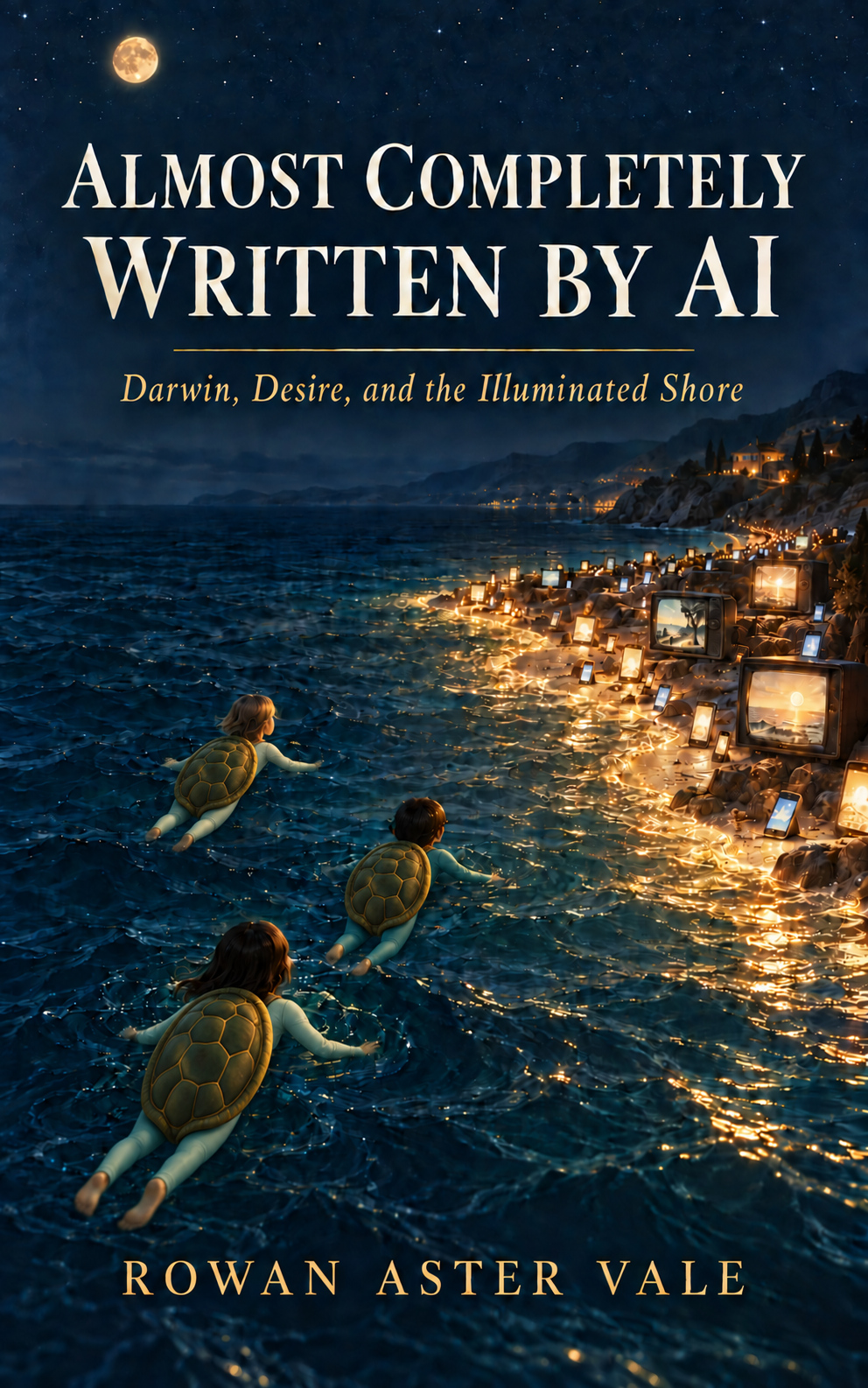
Hatchlings respond to cues from the beach and horizon. Artificial lighting can pull them away from the sea. The book uses that real issue as the starting point for a wider question about the signals we follow.
Meet the book →Challenge a friend
Your personal best stays on this device. Complete all three waves with at least one rescue to qualify for the public board.
Learn about real sea turtle lighting →All-time high scores
Loading recorded scores…
The list grows with real completed runs, up to the top 1,000. Anonymous labels; no player names or accounts. The server replays your recorded controls to calculate the score. This checks game rules; it cannot prove that a human played. Boards use the same rules version. Your device best also includes practice runs.
Let a friend take the next tide.
Can you guide the hatchlings to the sea? Share Moonward as a game to play, with no account needed.