The books · Rowan Aster ValeChoose the question
you want to live with.
Four standalone nonfiction books about AI, attention, and human choice. Compare them here, explore a book, or go directly to its Kindle or paperback edition on Amazon.
Artificially Superintelligent
AI can learn and perform well. What does that establish, and what are we assuming? Four standalone nonfiction books by Rowan Aster Vale explore capability, judgment, and the purposes we ask intelligence to serve. Read in any order.
Browse the series on Amazon
Why this name?
A simple place to beginNew to using AI? Start with your own judgment.
If you want help choosing a first book, AI: An Extension of You is our suggested starting point for personal AI, creativity, and useful assistance. If a different question brought you here, follow it: attention and screens, work and human worth, or cooperation and the goals we give powerful tools.
All four books are live in Kindle and paperback, and the ebooks are enrolled in Kindle Unlimited. A Kindle Unlimited membership is separate from buying an ebook. Amazon shows current membership terms, samples, prices, and regional availability.
These are books for reflection and discussion. They offer questions and arguments to examine, rather than a promise of income, a guaranteed result, or technical mastery.
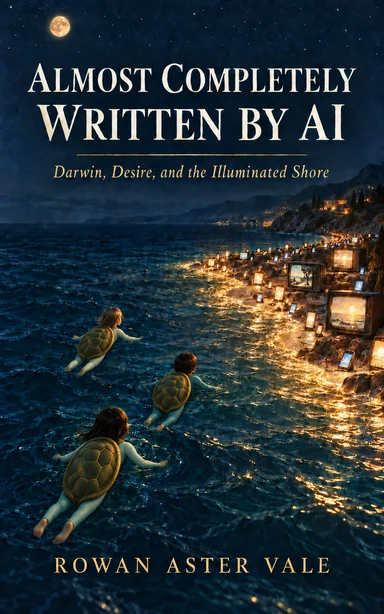
Attention & evolutionDarwin, Desire, and the Illuminated Shore
Why do compelling signals sometimes lead us away from what helps us? Follow the question from sea turtles and natural selection to screens, culture, and human choice.
About this book
Personal AI & judgmentPersonal Intelligence Without Surrendering Your Judgment
An assistant can supply an answer. Explore what it takes to support your memory, creativity, and learning while keeping the decisions that matter in your hands.
About this book
AI & human worthThe Human Consequences of AI
When excellent work becomes easier to produce, what happens to the people who built their lives around being good at it? Explore creativity, work, family, and human worth.
About this book
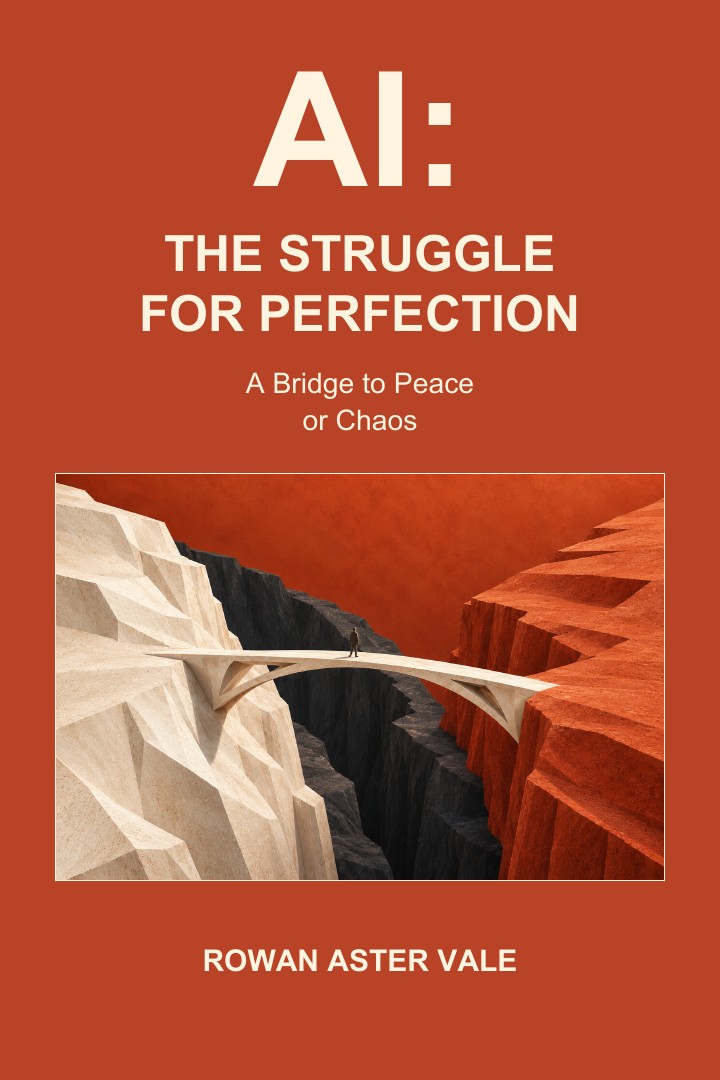
AI, purpose & cooperationA Bridge to Peace or Chaos
More capable AI can sharpen the purposes we give it. Explore human judgment, cooperation, and the choices that could move us toward peace or deepen conflict.
About this book
There is no required reading order. Amazon shows current prices, previews, and availability for your location.
The question behind the nameWhy Artificially Superintelligent?
AI can learn from data, recognize patterns, and produce useful results. An achievement tells us something about what a system can do. It does not, by itself, establish how reliably that system will handle every other task or set of circumstances. A broader claim needs broader evidence.
Artificially Superintelligent names the gap between demonstrated capability and the certainty added to it. When we take “it did this well” to mean “it can be trusted on everything,” part of what we are trusting is an assumption of our own. The capability can be real while the confidence we place in it reaches beyond what has been shown.
There is a further question. Improving a chosen measure does not, by itself, establish that the wider result is better. We also need to examine what the measure includes, what it leaves out, and who experiences the consequences. These four books follow that question through attention, personal AI, human worth, and the pursuit of peace. The title leaves open how capable AI may become. It asks what the evidence supports in the situation before us.
The evidence behind the distinction
The HBS report on Navigating the Jagged Technological Frontier (2023) describes uneven capability in a field experiment using GPT-4 with consultants. It supports a claim about performance across the tasks studied, not a permanent limit on AI.
Kalai and colleagues’ Why Language Models Hallucinate (2025) examines how training and evaluation incentives can encourage plausible but incorrect answers when language models are uncertain.
Amodei and colleagues’ Concrete Problems in AI Safety (2016) distinguishes failures involving objectives, side effects, supervision, and learning. A successful measure and a successful human outcome therefore need separate examination.
These sources support the specific distinctions described here. The title offers a way to examine the assumptions we add to capability; it is not a technical definition of superintelligence or a claim that intelligence requires perfection. The companion exercise What if AI gets better at the wrong goal? puts the question to work.
Which AI book should I read first?
What question matters to you?
For attention, screens, and the signals we follow, begin with Almost Completely Written By AI. For making a personal assistant useful while retaining your judgment, choose AI: An Extension of You. For work, creativity, and human worth, start with When Great Becomes Average. For cooperation, public choices, and the purposes we give powerful tools, choose AI: The Struggle for Perfection.
Do I need to read the series in order?
No. Artificially Superintelligent is an unordered series. Each book develops its own question and can be read independently. The shared thread is human judgment: what are we trying to improve, and who gets to decide?
Are these technical AI manuals?
These are reflective nonfiction books for general readers. They explore human questions around AI rather than teaching programming or promising a formula for success. The free companion guides offer practical exercises; the books make room for longer arguments and disagreement.
Can my book club use them?
Yes. Choose the question your group wants to explore. Our printable discussion guide has original prompts for every book and a 30-minute conversation format. You do not have to agree with an argument to have a useful discussion.
Where can I buy or preview the books?
Every title above links directly to its Kindle and paperback editions on Amazon. Use Amazon’s sample option where available, and check the current price and availability for your location. You can also browse all four books on Amazon.