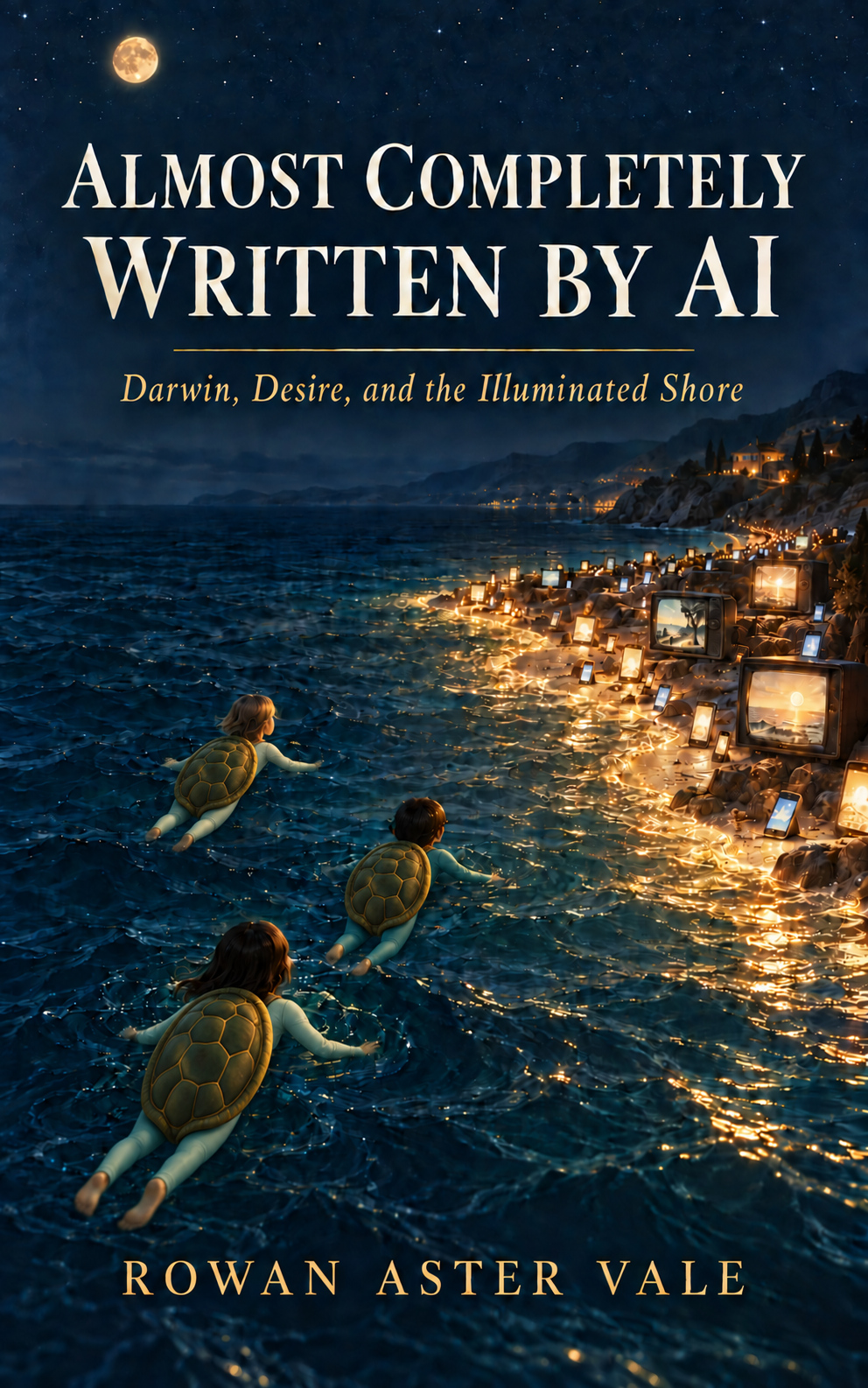
If a behavior repeatedly hurts us, it is easy to imagine evolution will eventually erase our attraction to it. The logic sounds neat. The biology is not.
Selection has no target called “well-being”
Natural selection requires inherited variation that affects reproduction in a particular environment. It has no built-in measure of happiness, friendship, attention, or a life well lived. A habit can feel costly without creating the conditions for genetic change. Even when those conditions exist, the environment may change faster than a population does.
The Natural History Museum’s explanation of selection is a useful starting point. Graham Bell’s review of evolutionary rescue treats adaptation as conditional, not inevitable. Neither source predicts a future human aversion to smartphones.
A useful comparison can still mislead
Plants bend toward light through photoreceptors and growth signaling. Some flying insects near artificial light appear to orient their backs toward it, which can disrupt flight. People check a phone for many possible reasons: a message, a task, a habit, social expectation, entertainment, or fear of missing something. These are different mechanisms. “We are like moths” may open a conversation; it cannot close a scientific argument.
Darwin’s The Power of Movement in Plants rewards a better habit: change a condition and observe the response. The modern phototropism review and 2024 insect flight study show why the details matter.
Culture can move on another clock
People can change habits, norms, product design, and institutions within a lifetime. That does not mean every intervention works or that less screen time is always a good outcome. It means we can ask what benefit we want—sleep, connection, learning, autonomy—and test whether a change produces it.
Culture can also pass practices between people. Creanza, Kolodny, and Feldman describe cultural evolution and its interactions with genetic evolution. Cultural change is real, but it carries no automatic promise of progress.
Instead of asking whether we will evolve away from the phone, ask: which cues serve us, which mislead us, who shapes them, and what changes their consequences?